
Rusted shelf angles can turn a leak into a support problem
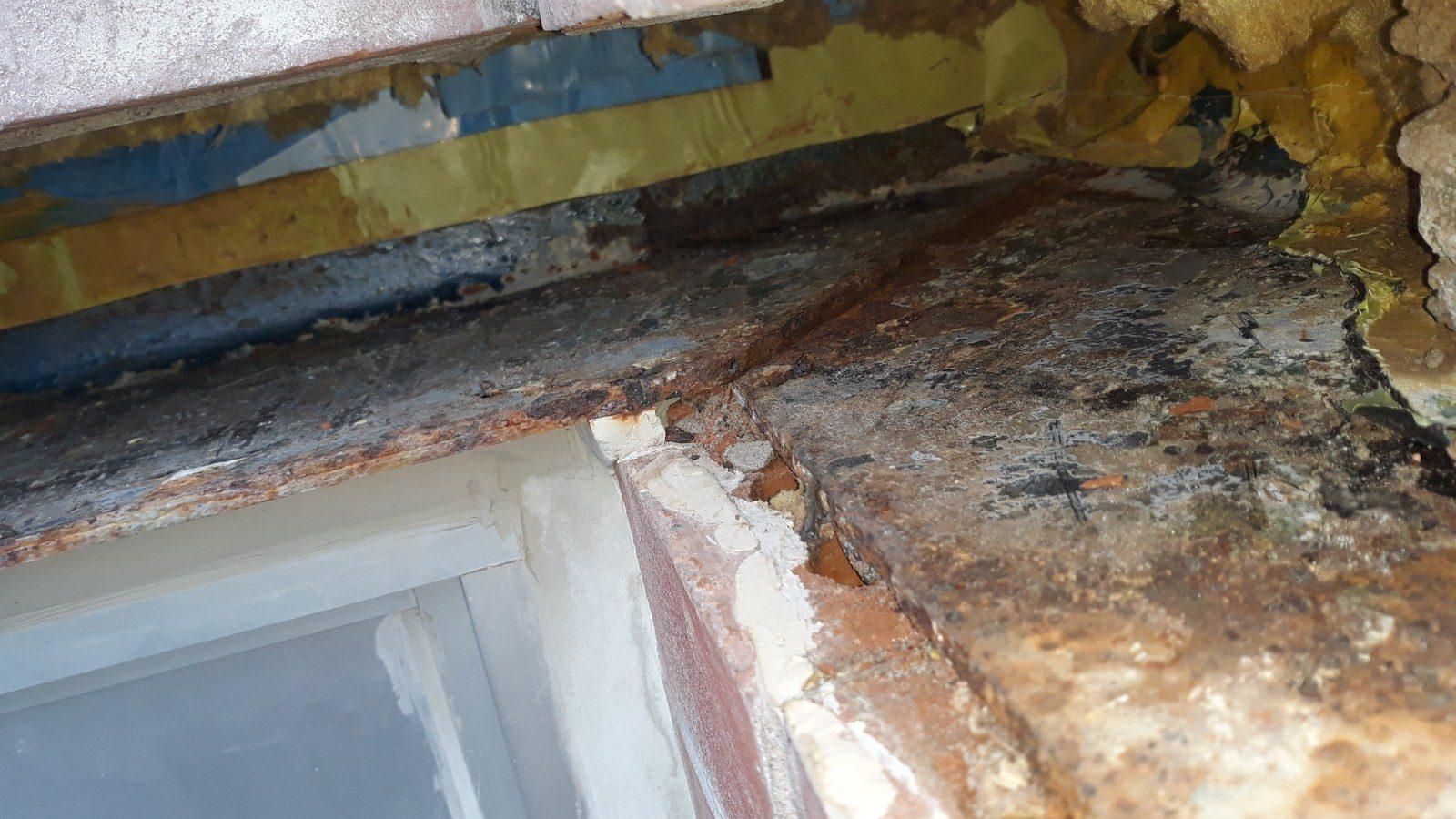
A shelf angle is a steel support that carries a section of brick or stone veneer and transfers its weight to the building structure. In a wall designed with a drainage cavity, flashing at the angle helps direct water back outside. The steel support and the water-management details need to work together.
When steel corrodes, the rust occupies more space than the original metal. That expansion can push against the surrounding masonry and disrupt adjacent flashing or membrane details. Depending on the assembly, movement and deteriorating steel edges can damage a flexible membrane or separate its connections. Rust does not mean every nearby membrane has failed, but the junction needs investigation.
A damaged flashing or membrane can let water bypass the intended drainage path and reach the backing wall, connections or interior. The relationship can also run the other way: an existing flashing defect can keep the steel wet and accelerate corrosion. Finding the original water entry point matters as much as identifying the visible rust.
Continued corrosion can reduce the thickness of the angle or damage its connections. Rust expansion can also crack or displace the masonry it supports. In severe cases, the affected wall section can lose adequate support and become unstable. This is a potential structural concern in the masonry support system; it does not mean the entire building is unstable whenever rust is found.
Rust staining, cracking along a support line, displaced brickwork and recurring leaks can be reasons for a closer look. The photograph shows exposed corroded steel above a window. A photograph alone cannot establish the remaining steel thickness, connection condition, exact support arrangement or load-carrying capacity.
An appropriate investigation considers the steel, its attachments, the supported masonry and the continuity of the flashing and membranes. A qualified structural engineer should assess suspected loss of support or instability. A repair plan needs to address both the water path and the support condition, rather than covering the visible stain. Contact Everest to request a site visit and discuss what your building needs.